Russian propaganda is attempting to exploit the scandal in Estonia. The Datasel case: the “missing” €70 million and the ammunition intended for Ukraine that never reached it. Where is the money? Who set Defence Minister Hanno Pevkur up? How did a genuine failure within Estonia’s defence system turn into an information weapon for Russia, and who helped amplify this narrative from within Estonia itself? An analysis of the situation by Estonian publicist Andrei Kuzichkin, exclusively for PostPravda.Info.
The Datasel case: €70 million, ammunition that never reached Ukraine, a political crisis, and an information war surrounding a real defence procurement failure
Seventy million euros. In September 2026, this figure became the symbol of the biggest scandal to hit Estonia’s Ministry of Defence in recent years. The information explosion came with a barrage of dramatic claims: “Estonia paid the Indian company Datasel €70 million for artillery shells for Ukraine… The shells never arrived… The money disappeared… Estonia’s Defence Minister Hanno Pevkur resigned… Criminal investigations were launched… Crime or mismanagement?.. Why is the prime minister silent?.. Could this be large-scale corruption in the Estonian government?.. The government must resign!”
Each dramatic statement in this stream of information sounds more frightening than the one before it. But each requires clarification. That is why the Datasel story is interesting not only as an example of serious problems in Estonia’s defence procurement system. It also allows us to trace in detail how, in modern information warfare, a real event gradually changes its form, substance and meaning.
It is not necessary to create a fake. Sometimes it is enough to take a real fact, remove one nuance, round off one number, replace the word “disputed” with “lost,” and then connect a specific administrative failure to a much broader political conclusion. At the end of this chain, the question “Why did Estonia not receive the ammunition ordered for Ukraine?” imperceptibly turns into a very different one: “Why help Ukraine at all?”
Also read on PostPravda.Info: Information War: Adherents of the “Russian World” Attack Estonia’s Media
A mistake that cannot be denied
Let us begin with the unpleasant part for Estonia. The National Audit Office found serious and systemic problems in the management of assets, contracts and financial reporting within the Ministry of Defence’s area of responsibility. These were not minor accounting errors. Auditors pointed to inadequate monitoring of contract performance, problems confirming receipt of goods, accounting for advance payments, documentation and the division of responsibilities. The National Audit Office specifically warned that such a system creates opportunities for the misuse or misappropriation of state assets. The Datasel story became a vivid, if unattractive, illustration of these problems.
In 2024, the Estonian Centre for Defence Investments (RKIK) signed four contracts with Italy-registered Datasel S.R.L., owned by India’s Neco Defence Munitions, for the production of a large batch of artillery shells. The ammunition was intended for Ukraine. The first contract was signed in August 2024. Datasel received a €15 million advance. Another contract and another advance payment followed in October. The first delivery was due in November, but it was delayed. Cooperation nevertheless continued. Later, the Estonian side raised objections concerning product quality and the deadlines for fulfilling the contracts. Estonia refused to take the manufactured ammunition onto its books. The dispute reached arbitration and the courts. Another circumstance looks even worse: today, the contracting authority, RKIK, cannot provide documentation showing exactly how Datasel was selected as a partner. These are serious questions. Asking them is not Russian propaganda.
In a democracy, journalists are obliged to ask questions, parliament is obliged to demand answers, the National Audit Office must scrutinise how funds are spent, and prosecutors must determine whether a crime has been committed. The European Public Prosecutor’s Office has already opened an investigation into transactions between Estonia’s RKIK and Datasel. But this is where the relatively straightforward story of poor public administration ends and a much more complicated story begins: information as a weapon of propaganda.
Where’s the money, Lebowski?
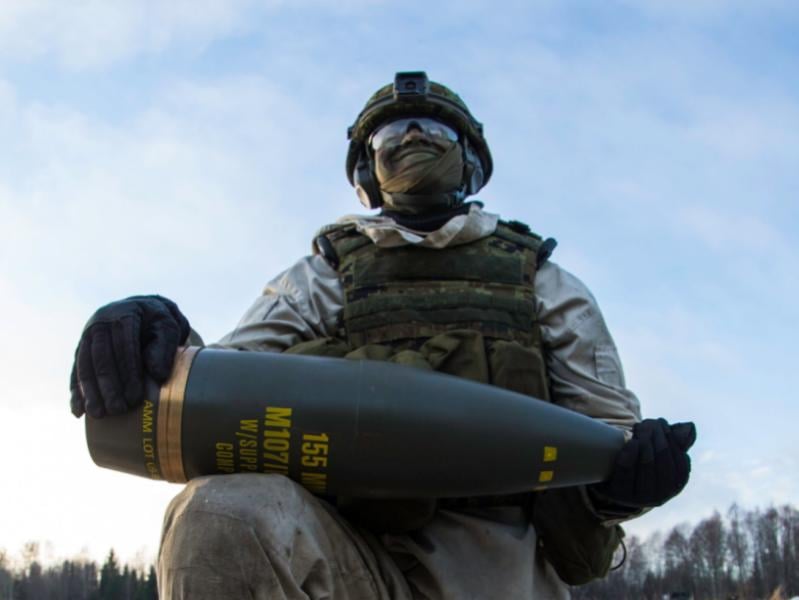
The most successful information product of the scandal was the figure: €70,000,000. It is round, large and frightening. It works unfailingly on people who lack critical thinking skills. But it makes an impression on smart people too. In reality, the figure does not mean quite what a reader may imagine after seeing dozens of headlines and articles. The National Audit Office reported €71.6 million in problematic advance payments to all suppliers. The largest supplier, Datasel, received €59.8 million. The company confirms receiving the advance but disputes claims that the goods were of inadequate quality, saying it was prepared to complete the contract. The Estonian side wants the contract terminated and the money returned. The courts and arbitration will determine who is right. But one thing is already clear: claims such as “Datasel stole €70 million from Estonia” or “€70 million disappeared” are not established facts. This is where the first information mutation begins.
First there were disputed advance payments. Then there was a failed €70 million contract. Then: Estonia paid €70 million and received no shells. Then: Estonia lost €70 million. From there it is only a small step to: €70 million was stolen! Stolen from whom? From the people!!! But that is already replacing facts with fiction. In reality, Estonia’s procurement of shells for Ukraine used the European Peace Facility, which draws, among other sources, on proceeds from frozen Russian state assets. The popular formula “Estonian taxpayers lost €70 million” therefore requires an important correction: these were European funds. The problem does not disappear, however. If the relevant expenditure is not accepted by the European Union, the financial liability could potentially fall on Estonia. A more accurate formulation would be: “The money was European. The risk may become Estonian.”
There is an almost grotesque irony in this story. Proceeds linked to frozen Russian assets were supposed to help turn European money into ammunition for Ukraine. Instead, the failed procurement turned into a political crisis in Estonia, one of the European countries most actively supporting Ukraine.
Information that travels on its own
Let us follow the story’s further journey through the global information space. The initial reports concerned a supplier with no experience in producing the relevant artillery ammunition, failed deliveries, advance payments and complaints about the goods. Very quickly, the wording became sharper. Ukrainian media reported that “Estonia paid €70 million for ammunition it never received.” Germany’s Deutsche Welle described the supplier as a “shell company.” English-language media used the phrase “€70m defence procurement scam.” The Romanian outlet Telex went even further: “Țeapa secolului” — “the scam of the century.” Thus a sequential transformation takes place: inexperienced supplier → shell company → €70 million gone missing → scam.
It is important to note that this transformation did not begin in Moscow. These information mutations emerged in the Ukrainian and European media spheres, including Estonia’s. That is precisely why this case is so interesting from the perspective of hybrid warfare. Russian propaganda no longer needs to create the original material: the free press produces the information. Russia only has to change its scale and political resonance.
In the Russian information space, the first reports about the scandal in Estonia also looked relatively conventional. Media outlets retold the Estonian reports, describing the defence minister’s resignation, the troubled contract and millions of euros said to have disappeared. Then another mutation occurred.
Soon, Russia’s OTR television channel called what was happening in Estonia a “corruption explosion” and asked whether the Estonian case could trigger a “domino effect across the entire EU.” The subject of the story had quietly changed. At first the question was: “Why did a particular Estonian state institution mishandle a particular procurement?” Then the topic was scaled up and the question became: “Does the Estonian story demonstrate that the entire system of European aid to Ukraine is corrupt?” That is a completely different proposition. The Datasel problem in itself does not prove it. But this is precisely how the information technique works: a confirmed fact is used as the basis for a much broader conclusion that does not logically follow from that fact.
In the Russian information space, the last qualifications surrounding the “Estonian case” disappear. The money is now simply “stolen,” the investigation is portrayed as a cover for corruption, and speculation appears about the personal enrichment of politicians involved in the case. A complete chain is formed: failed procurement → corruption → corrupt Estonia → corrupt EU → corrupt aid to Ukraine. From this, the political question follows automatically: “Why does Europe keep helping Ukraine while robbing its own taxpayers?” Behind this formula of false concern for European citizens lies the Kremlin’s strategic interest: Europe stops military aid to Ukraine, Ukraine capitulates, and Moscow wins both on the information battlefield and on the real one. Putin has beaten everyone again. But for such a victory he will certainly need help from inside the besieged castle of European democracy. And that help exists.
Aleksandr Chaplygin: journalist, MP and amplifier of narratives
A special place in the current story belongs to Aleksandr Chaplygin, a member of the Riigikogu from the Centre Party. He has long and systematically criticised Estonia’s defence and foreign policy. His statements about excessive Estonian military spending and the need for more rational relations with Russia have repeatedly been quoted by Russian media. Chaplygin himself has always rejected accusations that he holds pro-Kremlin positions and has publicly called himself an Estonian patriot. However, Chaplygin’s information activity has already attracted the attention of researchers.
In April 2026, the Atlantic Council’s Digital Forensic Research Lab investigated the spread of the fabricated EULosses online counter, which purported to show the supposedly colossal economic damage suffered by the European Union because of sanctions against Russia. The researchers paid particular attention to Aleksandr Chaplygin. Before EULosses itself was widely circulated, he actively published material on Facebook, TikTok and YouTube about the alleged damage caused to Estonia and the EU by anti-Russian sanctions. One of his Facebook posts received around 1,500 reactions, 550 comments and more than 50 shares. DFRLab did not claim that Chaplygin participated in a Russian information operation. The study demonstrates something different, and perhaps more important: political narratives already present within democratic countries can create a favourable information environment into which external disinformation can then be easily inserted.
For now, there is no evidence that Aleksandr Chaplygin acts on instructions from Russian intelligence services or is connected to them in any way. But he was indeed one of the politicians who systematically raised questions about the management of defence funds. On 9 July, Chaplygin sent the defence minister a written parliamentary question concerning the findings of an earlier National Audit Office audit. It raised issues of contract performance, asset accounting, inventories, advance payments and procurement procedures. Chaplygin later said that his complaint had become the basis for one of the criminal proceedings and, after Pevkur’s resignation, told his readers: “Together, we managed to force the minister to resign.” It would be an exaggeration to say that Chaplygin “uncovered the Datasel scam.” But it would be equally wrong to ignore his role in the political and informational development of the story. This is a good example of how difficult it is in modern information warfare to separate journalism, parliamentary oversight, political competition, domestic convictions and the external amplification of narratives.

No shells, but the war goes on
Hanno Pevkur’s resignation as Estonia’s defence minister did not end the story. On the contrary, the political conflict in the country moved to the next level. Urmas Reinsalu, chairman of the opposition Isamaa party and a member of the Riigikogu, demanded the resignation of Prime Minister and Reform Party chairman Kristen Michal and the entire government. He said that the public had seen only the “tip of the iceberg” in the defence procurement scandal and that the events demonstrated the Reform Party’s inability to manage not only national defence but the country as a whole. Reinsalu demanded answers about what the prime minister knew about the problematic contracts, when he learned about them and why the information had not been made public earlier. Thus the original chain — Datasel → RKIK → Pevkur — became: Datasel → Pevkur → Michal → government.
Estonian Prime Minister Kristen Michal responded to Urmas Reinsalu’s statement rather sharply. He accused his opponent not of seeking the truth but of “poliitmängurlus” — political gamesmanship. The prime minister acknowledges that it was a mistake not to inform the government and parliament of the financial risks in good time, but rejects the assumption that a prime minister must know the details of every process inside every ministry. The most important part of Michal’s response concerns Ukraine. On his Facebook page he wrote: “Ukraina aitamine ja kaasnevate riskide võtmine ei tohi kunagi olla põlu all.” — “Helping Ukraine and taking the associated risks must never become something to be condemned.” Here, Estonia’s domestic political conflict comes directly into contact with both the information war and the “hot” war.
The scandal is unfolding at a particularly sensitive moment. In 2026, Estonia’s defence expenditure will amount to approximately €2.4 billion, or around 5.4% of GDP. That is a great deal of money. This is precisely why attempts to turn the failure of one procurement into proof that the entire national defence system is dysfunctional are dangerous. Such problems are not unique to Estonia. Arms procurement for Ukraine takes place under extraordinary conditions: enormous demand, limited production capacity, intermediaries, competition among states for the same manufacturers, and the need to find ammunition rapidly around the world. Problematic military contracts have occurred in different countries, including Poland and the Czech Republic. Ukraine itself has entered into unsuccessful agreements with foreign suppliers. There have been problems with American, Polish and other suppliers. But a failed defence procurement does not prove that military aid to Ukraine is pointless — it proves the need for better oversight.
The consequences of the story can already be measured in more than euros. In June, 71% of Estonian residents trusted the Defence Forces; in September, 66% did. Among ethnic Estonians, the figure fell from 82% to 78%; among residents of other ethnic backgrounds, from 48% to 43%. This does not allow us to claim that the Datasel scandal itself caused the decline: coincidence in time does not prove causation. But another poll gives a direct result: two-thirds of respondents believe the scandal has significantly or rather significantly damaged Estonia’s international reputation. Thus, even if the state succeeds in recovering the disputed money, some damage has already been done. It is measured in trust. That is why the struggle over how the story is interpreted may prove more important than the money.
At the same time, support for military aid to Ukraine among Estonian residents did not decline in September; it actually increased. The share of those who believe Estonia should not rule out any form of military assistance to Ukraine rose from 43% to 47%. Support for sanctions against Russia is also growing. This creates a paradox: trust in the Defence Forces has fallen, while support for helping Ukraine has risen. One optimistic conclusion is that Estonian society still distinguishes between two things: the mistakes of its own defence bureaucracy and the need to help Ukraine resist Russian aggression.
Journalists on the battlefield
It would be wrong to blame the Estonian press for telling the public about Datasel. On the contrary. It was free journalism that uncovered a problem which state institutions had failed to explain to the public in time. But information warfare creates a new professional problem for journalism. To amplify and reproduce a Kremlin narrative today, it is not necessary to publish Russian propaganda. Sometimes it is enough to sacrifice precision for an effective headline. “€59.8 million in disputed advance payments” sounds bad; “€70 million disappeared” sounds excellent. “The supplier disputes the termination of the contracts” requires explanation; “shell company” fits neatly into a headline. The pursuit of a clickable title turns an investigation into a sensation, the sensation into a political generalisation, and the generalisation acquires a second life in the information system of a state interested in reducing trust in Estonia, the European Union and aid to Ukraine. This does not mean that journalists should remain silent. It means that, under conditions of hybrid warfare, accuracy and commitment to facts become elements of national security.
Estonia is obliged to investigate the Datasel story. If officials broke the law, they must be held responsible. If public money was lost through negligence, society has the right to know who made the wrong decisions. If there are signs of corruption or fraud in the deal, investigators and the courts must prove it. The political opposition has the right to demand accountability from the government, and the government has the right to answer those accusations. That is how democracy works. But democracy must also be able to do one more thing: recognise the moment when the substance of the dispute begins to change.
Investigating how €59.8 million was spent is one thing. Claiming that €70 million was stolen is another. Concluding that the entire defence system is corrupt is a third. Claiming that European aid to Ukraine is corrupt is a fourth. And demanding that this aid be stopped is already an objective of Russian propaganda. There is a long road between the first and the last statement. But in the modern information environment it can be travelled in a matter of days. Perhaps this is the main lesson of the Datasel scandal. Russia does not need to invent Estonia’s mistakes. It is far more useful to turn a real mistake into an argument for why the state cannot be trusted, allies cannot be trusted, and money should not be spent on Ukraine. That is why media literacy in hybrid warfare is no longer merely the ability to distinguish truth from lies. We need to recognise in time the danger of our own information being turned into a weapon against democracy.
Estonians need to demand the truth about the shells ordered from Datasel. But at the same time, it is worth remembering why those shells were being purchased in the first place. They were intended for a country that is now in the fifth year of defending itself against Russia’s full-scale aggression. And the investigation into why the ammunition did not reach Ukraine must not become an argument against military aid to that country. Glory to Ukraine!
Also read on PostPravda.Info: The Estonian-Russian Border: Smugglers, Mafia and Russian Spies. What Is Really Happening There?