Russia is not currently laying claim to the Baltic states. But it is increasingly constructing a historical and legal language of threats in which such claims could one day be formulated. Russia’s experience in recent years shows that when official discourse about neighbouring countries and peoples shifts into a language of enmity, the risk of conflict becomes harder to dismiss.
A Moscow District Court Ruling Opens Up Such a Possibility
On 5 October 2026, Moscow’s Tverskoy District Court handed down a ruling that, at first glance, concerns only the events of the Second World War. At the request of Russia’s Prosecutor General’s Office, 13 Estonian, Latvian and Lithuanian figures and five organisations were recognised as accomplices of Nazi Germany in war crimes and crimes against humanity committed “against the Soviet people” in 1941–1945. The list included the Estonians Ain-Ervin Mere, Ralf Gerrets and Julius Ennok, the Latvians Viktors Arājs, Herberts Cukurs, Gustavs Celmiņš and others, as well as representatives of the Lithuanian nationalist movement. The Estonian Omakaitse, the Latvian Aizsargi and Pērkonkrusts, the Lithuanian Activist Front and the Lithuanian Nationalist Union were also recognised as accomplices of Nazi Germany.
The involvement of individual representatives of these organisations in crimes committed by the Nazi occupation regime has long been known and has also been studied by historians in the Baltic states themselves. The main question, therefore, is different. Why, more than 80 years after the end of the Second World War, did the Russian state need to establish already known historical facts by a ruling of a Moscow district court? The answer given by the Prosecutor General’s Office takes the case far beyond history. The Russian authorities link the events of 1941–1945 to the policies of present-day Estonia, Latvia and Lithuania, accusing their governments of glorifying collaborators and distorting the role of the USSR in the Second World War. The Prosecutor General’s Office presents countering this as part of the defence of Russia’s national interests. This means that the issue is no longer only about the past.
Nuremberg Continues in the Tverskoy Court
For years, Russia has accused neighbouring states of “rewriting history” and demanded strict adherence to the outcomes of the Nuremberg trials. Yet an obvious paradox arises. Omakaitse, Aizsargi, Pērkonkrusts and the other organisations on Russia’s new list were not designated as criminal organisations in the judgments of the Nuremberg Tribunal. This does not prove their innocence. The Nuremberg trials could not investigate the crimes of every Nazi or collaborator in Europe, and perpetrators continued to be tried afterwards. What is unusual is something else: eight decades later, a Russian district court is expanding the circle of those historically classified as Nazi accomplices, and the result is immediately incorporated into contemporary state policy. Moreover, this is already the second such proceeding in just two months.
On 4 August, the same Tverskoy District Court in Moscow, acting on an application from the same Russian Prosecutor General’s Office, recognised Stepan Bandera, Roman Shukhevych, Andriy Melnyk and other Ukrainian nationalists, as well as the OUN and UPA, as accomplices of Nazi Germany. In the Ukrainian case, the political link to the present was even more explicit. The Russian side explained the need for its decision by citing the fight against the glorification of nationalists in contemporary Ukraine. First, a Russian court establishes “legally significant facts” concerning Ukrainian nationalists’ collaboration with Nazism. Two months later, the same mechanism is applied to historical figures and organisations from Estonia, Latvia and Lithuania. This no longer merely puzzles; it raises concern.
The Ghost of the Soviet People
The most interesting part of the ruling lies in the words that the people and organisations named are accused of “crimes against the Soviet people”. Yet the Estonian Omakaitse operated primarily on Estonian territory. This raises a fundamental question: why are people living in their own country, Estonia, in 1941–1945 classified as part of the “Soviet people” in today’s Russian legal construction? To answer that, we have to go back to 1920. On 2 February 1920, Estonia and Soviet Russia signed the Treaty of Tartu, ending the Estonian War of Independence. Russia unconditionally recognised the independence and sovereignty of the Republic of Estonia and voluntarily renounced “for ever” all sovereign rights over the Estonian people and territory. The treaty also established the state border: Petserimaa (now the Pechory District of Russia’s Pskov Region) and territories east of Narva became part of Estonia.
But in 1939–1940, following the Molotov–Ribbentrop Pact and its secret protocol, the USSR occupied and annexed Estonia. To return Estonia’s inhabitants to the status of the “Soviet people”, one has to accept the Soviet version of the events of 1940: after Estonia was incorporated into the USSR, the republic ceased to exist as an independent state and its population became Soviet.
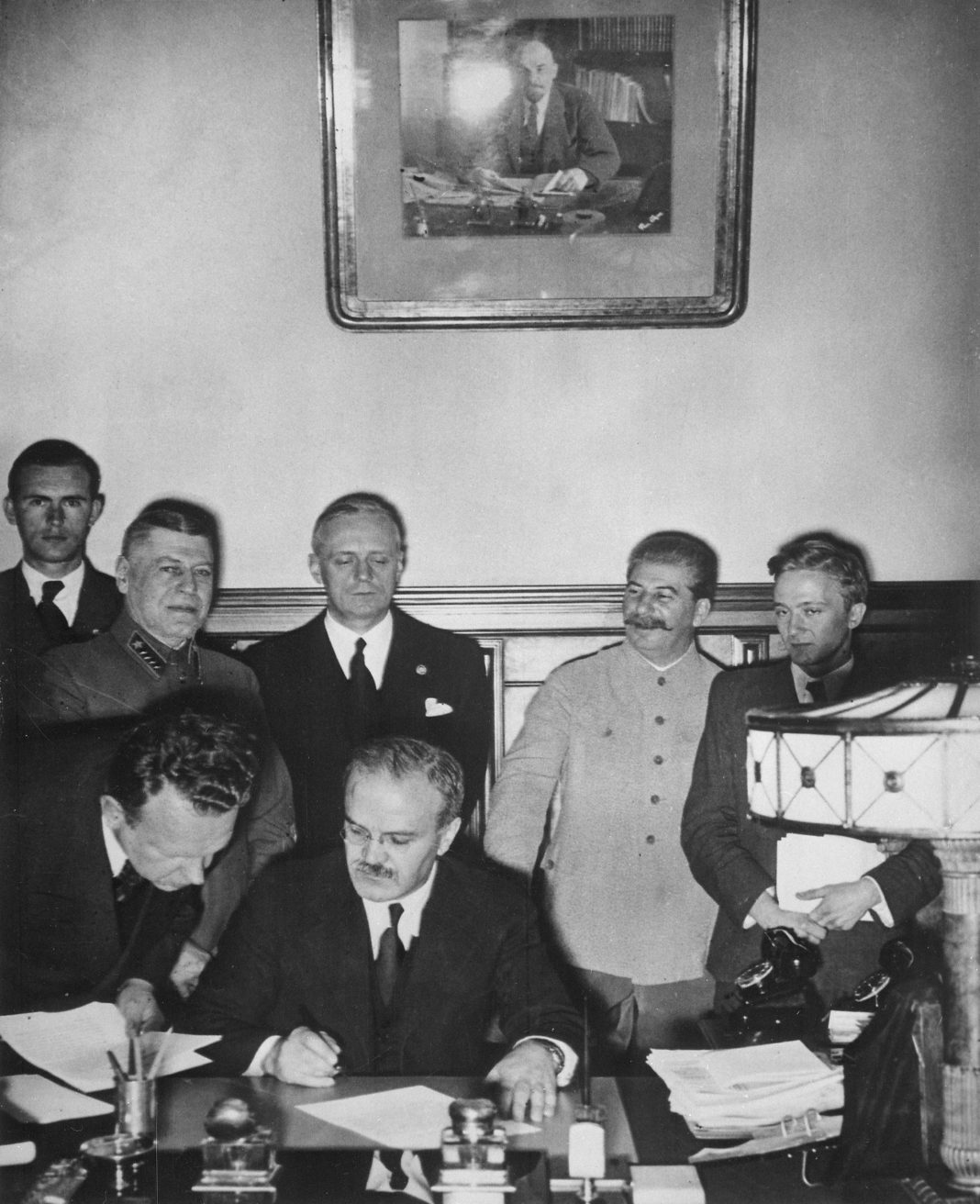
If the Republic of Estonia continued to exist after 1940, the principle of its legal continuity also remains intact, with the Treaty of Tartu as one of its foundations. If, however, the Russian construction is accepted — that Estonia became part of the USSR — its inhabitants become the “Soviet people”, state continuity is broken, and the 1920 treaty can be regarded as having ceased to apply. The Tverskoy Court ruling does not, of course, change state borders or grant Russia any new territorial rights. But it legally reinforces precisely the Russian version of history. That is why a Moscow district court ruling in 2026 may prove potentially far more significant than a proceeding against collaborators who have long been dead.
Moscow Goes on the Offensive on the Legal Front
The story deserves even greater attention because Moscow is simultaneously moving other long-standing claims against the Baltic states into the legal arena. In 2026, Russia announced that it was preparing a case against Estonia, Latvia and Lithuania before the International Court of Justice, accusing them of discrimination against Russian-speaking residents. As the media projects Re:Baltica, Delfi and LRT established in a joint investigation, the legal groundwork for the case began as early as 2022. Since then, Russia has sent five diplomatic notes each to Latvia and Lithuania and four to Estonia, successively raising claims concerning the Russian language, education, citizenship and historical memory.
On 25 May 2026, Vladimir Putin signed Federal Law No. 149-FZ, amending the laws “On Citizenship of the Russian Federation” and “On Defence”. The amended Law on Defence allows the Russian president to deploy the Armed Forces to protect Russian citizens abroad if they are arrested, detained, or subjected to criminal or other prosecution under decisions by certain foreign or international judicial bodies. This is an important qualification: the law does not automatically give the president the right to send troops into another country on the pretext of any alleged “discrimination against Russian speakers”. Nevertheless, Russian legislation has indeed expanded the range of circumstances in which the armed forces may be used to protect Russian citizens outside the country. This has happened against the backdrop of increasingly harsh accusations by Moscow against neighbouring states.
Russia has already accused the Baltic states of discriminating against Russian speakers, destroying Soviet historical memory and glorifying Nazi accomplices. Now another accusation has been added: a Russian court establishes a “legally significant fact” that national organisations from these states committed crimes against the “Soviet people”. Each of these elements exists independently and, by itself, does not prove preparations for territorial claims or Russian military intervention. Taken together, however, they form an increasingly developed historical, political and legal language of conflict between Russia and the Baltic states. Moscow is increasingly communicating with these states through pressure and threats. At the same time, the Russian authorities apply double standards, accusing other countries of actions and crimes that Russia itself is accused of committing.
Sterilising Memory
Moscow constantly accuses Poland and the Baltic states of destroying monuments to Soviet soldiers and attempting to rewrite the outcome of the Second World War. Yet monuments to victims of political repression and deported peoples have long been disappearing in Russia itself. In 2026, this sterilisation of memory acquired an almost complete form. Moscow’s Gulag History Museum, closed in 2024 and known for collecting evidence of Stalin-era repression, was finally abolished, while a Museum of the Memory of the Victims of the “Genocide of the Soviet People” during the Great Patriotic War was created in its place. The memory of the crimes of the Stalinist state gave way, in the same museum space, to the memory of Nazi crimes against the “Soviet people”.
Memorials to people from other countries have also been caught in the machinery grinding away the memory of NKVD victims. In spring 2026, the Memorial Square for Victims of Political Repression in Tomsk, next to the NKVD Remand Prison Museum, was closed. National memorials to Estonians, Poles, Latvians, Lithuanians and other victims of Stalinist repression who died in the Tomsk region disappeared from the site. Estonia, Latvia, Lithuania and Poland issued a joint protest.
For me, this is not someone else’s history. I lived in Tomsk for many years and in 2008 personally took part in installing a memorial stone bearing the inscription “To the Estonians Who Died on Tomsk Soil”. It is no longer there. Vasily Khanevich, the museum’s founder and long-time head, who also known as the chairman of the board of the Tomsk Polish National Center “White Eagle”, had earlier left the museum after local media reported that he had been forced to resign.
The fate of Katyn is no less symbolic. In 1990, after decades of denial, the USSR acknowledged the responsibility of Stalin’s NKVD for the shooting of Polish officers in the spring of 1940 in the forest near Katyn. A memorial was opened there in 2000. In 2026, however, the Russian Military Historical Society organised an exhibition near the Katyn memorial complex entitled “Ten Centuries of Polish Russophobia”. A place commemorating Polish victims of a Soviet crime became a venue for a narrative about the centuries-old hostility of the Polish people themselves towards Russia. This is a different model of historical memory.
And here the Ukrainian parallel is difficult to avoid. Russian rhetoric portraying Ukraine as a hostile state began with denunciations of Ukrainian “nationalists”. Then came the “Nazis”. Next came claims that the Russian language and Russian-speaking residents were being persecuted in Ukraine. Vladimir Putin then began speaking about the artificial nature of Ukrainian statehood, territories allegedly transferred to Ukraine improperly by the Bolsheviks, and the historical unity of Russians and Ukrainians. Ukraine was declared an “anti-Russia” and a Western military bridgehead. In February 2022, “denazification” became one of the officially proclaimed goals of Russia’s invasion.
The purpose of sterilising memory is to substitute one version of history for another and create a false memory. Once that has been done, it becomes easier to persuade the public that Russia has lived for centuries surrounded by enemies and is therefore constantly forced to fight for its freedom and independence. The list of enemies can always be expanded.
Could Russia Lay Claim to the Baltic States?
Today Moscow recognises Estonia, Latvia and Lithuania as independent states. All three are members of NATO and the European Union. But territorial claims rarely emerge from a single court ruling. First comes the historical argument; it turns into political debate; then legal justifications appear. In Estonia’s case, a dispute with Russia has long existed over whether the republic ceased to exist in 1940, whether the Treaty of Tartu remains in force, and how the country’s legal continuity should be understood. Now a Russian judicial formula has been added: after 1940, Estonia’s inhabitants were part of the “Soviet people”.
That raises the next question: if Estonia really became a lawful part of the USSR in 1940, on what basis did it restore the same Republic of Estonia, founded in 1918, in 1991? If the Treaty of Tartu ceased to apply, what happened to Russia’s commitment to renounce “for ever” sovereign rights over the Estonian people and territory? And finally, if Moscow regards the present territorial and legal order in the Baltic states as the result of an “erroneous interpretation of history”, what would prevent Russia from one day deciding to “correct” that “error”? That is why the Tverskoy District Court ruling should be taken more seriously than yet another episode in Russia’s struggle for a monopoly over what it presents as the true historical memory.
Also read on PostPravda.Info: The Estonian-Russian Border: Smugglers, Mafia and Russian Spies. What Is Really Happening There?